
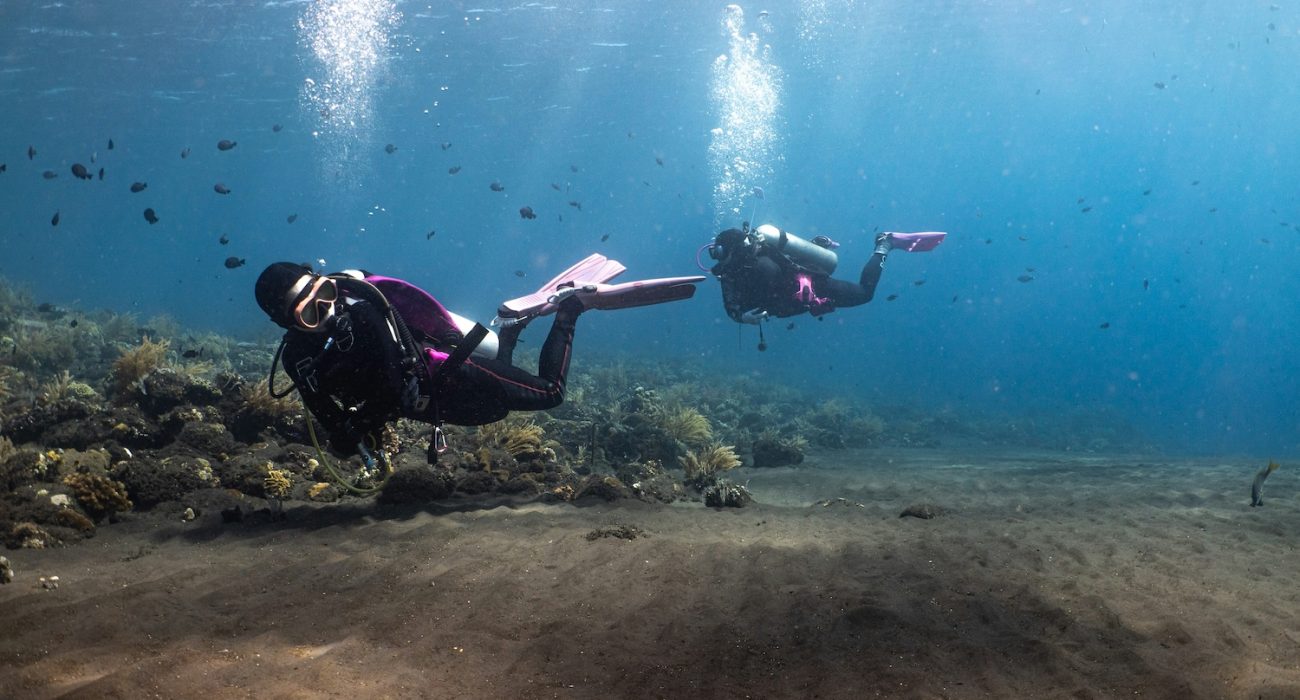
The Bahamas is stunning above the water, but the real adventure starts when you dive beneath it. Sure, the beaches are gorgeous, and the rum punches hit just right. But you haven’t really experienced the Bahamas’ magic until you’re underwater.
We’re talking about drift dives that’ll get your adrenaline pumping. Shark encounters that’ll make you feel like you’re in a nature documentary. Blue holes, so deep and mysterious, that they seem otherworldly.
So, you’re in for a treat today. We’ve highlighted the 10 best dive sites in the Bahamas, the best time of year to go, and finally, some necessary tips for you to make the most out of your diving experience. Let’s dive in!
Best Dive Sites In The Bahamas
1. The Washing Machine
Ever wanted to feel like you’re inside a giant blender? Welcome to the Washing Machine!
Let us tell you that it isn’t your average drift dive. It’s an exhilarating underwater roller coaster in the Exumas. The currents here are no joke. They’ll spin you, flip you, and send you soaring through the water.
One minute you’re gliding smoothly. The next, you’re tumbling through a natural water vortex. It’s absolutely thrilling. But here’s the payoff:
Once you navigate through the churning currents, you’ll emerge into calmer waters surrounded by stunning coral formations. Plus, eagle rays often cruise by to say hello. And don’t mind the reef sharks patrolling the area.
With that, this dive is best for intermediate to advanced divers. The currents can be unpredictable and strong. But if you’ve got the skills and the nerve? You’re in for the ride of your life!
2. Barracuda Shoals
Want to dive with hundreds of barracudas circling overhead? That’s exactly what you’ll get at Barracuda Shoals.
This diving site is in shallow waters, making it suitable for divers of all levels. The reef here is vibrant and healthy. Colorful sponges cover every surface. Sea fans also sway gently in the current.
The real stars of the show are the barracudas. Schools of them form massive, swirling formations above you. They move together like a silver tornado; it’s rather mesmerizing to watch.
You’ll also spot plenty of other reef fish darting around. Groupers hide in the crevices, and Angelfish flutter past in pairs. Trust us: the biodiversity here is impressive.
Finally, the visibility is usually excellent. We’re talking 100 feet or more on a good day. That means you can see the full spectacle of marine life surrounding you. So, bring your camera!
3. Fowl Cay Preserve (Just North of Man-O-War Cay)
Located just north of Man-O-War Cay, Fowl Cay Preserve is a protected marine area. And it shows. The underwater ecosystem here is pristine and thriving.
The preserve protects over 50 acres of marine habitat. That means the wildlife here is abundant and comfortable around divers. You’ll see snappers, grunts, and parrotfish in huge numbers. Nurse sharks often rest on the sandy bottom.
Truly, this is reef diving at its finest! Healthy coral gardens also stretch across the seafloor. Tropical fish are everywhere you look. Turtles peacefully glide by, completely unbothered by your presence.
Additionally, the dive sites here range from shallow reefs to deeper walls. So, there’s something for everyone. Beginners can comfortably explore the shallower areas. Advanced divers can venture to the wall drop-offs for more dramatic underwater landscapes.
Planning to dive here? Consider staying at Sea Glass Found on Man-O-War Cay. A luxury vacation rental right in the heart of the action. You’ll be minutes away from some of the Bahamas’ best diving sites. And after a day underwater, you can relax in style with stunning ocean views.
4. Abaco Shark Rodeo / Walker’s Cay
Fun Fact: Walker’s Cay is named the ultimate shark encounter in the entire world. And if you’ve ever been there, you know that’s not an exaggeration.
During the famous Shark Rodeo, up to 100 sharks show up for the dive. Caribbean reef sharks and blacktip sharks swarm the area in a controlled feeding frenzy. They circle, they dart, they come close enough to make your heart skip a beat.
As such, this dive requires respect and experience. You need to stay calm and follow your guide’s instructions carefully. But if you’re up for it, this dive could be bucket-list material. It’s the kind of experience you’ll be talking about for years.
5. Historic USS Adirondack Wreck (Near Man-O-War Cay)
History buffs, this dive is for you. The USS Adirondack sits on the reef off Man-O-War Cay and has been there since 1862.
This Civil War-era ship had a short but dramatic life. She was commissioned by the Union Navy to blockade Confederate ports. Only six months after her launch, she wrecked on the reef. And there she’s stayed for over 160 years.
Since the Adirondack was a wooden vessel, most of the structure has long since deteriorated. What remains is: Seven cannons of varying sizes lie scattered across the reef. They’re massive and haunting reminders of the ship’s wartime mission.
The wreck sits in relatively shallow water, which makes it accessible for divers and snorkelers alike. The reef around the wreck is also vibrant and alive. Coral has claimed the cannons as part of their ecosystem.
Diving here? Stay at Sea Glass Found properties on Man-O-War Cay. You’ll be minutes away from this incredible piece of underwater history. Plus, you can explore the charming island between dives.
6. The Tunnel
The Tunnel site is where you get to swim through an underwater cave system with shafts of light piercing through from above. The dive site features a massive swim-through tunnel carved naturally into the reef.
Inside the tunnel, the light creates dramatic effects. Beams filter down through cracks and openings above. The play of shadows and brightness means your photos will look absolutely incredible.
And don’t worry: The tunnel is spacious enough that you won’t feel claustrophobic. The rock formations here are also impressive. Ancient coral and limestone create interesting textures, too.
Be on the lookout for the marine life. You might spot lobsters tucked into crevices or schools of fish using the tunnel as a highway. Nevertheless, this dive is for intermediate divers who are comfortable with overhead environments and have good buoyancy control.
7. The Towers
The Towers are dramatic coral formations that shoot up from the seabed like natural pillars. Some reach heights of 30 feet or more. They create an otherworldly landscape that’s unlike anything else you’ll see.
Additionally, the towers are covered in healthy hard and soft corals. Sponges add pops of color, including vibrant purples, oranges, and yellows. They’re every photographer’s dream!
Pelagic fish often cruise around the towers. Jacks, barracudas, smaller reef fish, and moray eels are just a few examples you’ll find here.
Further, the depth of this site varies, making it suitable for different experience levels. Shallower sections work great for newer divers. Advanced divers can venture deeper to explore the base of the higher towers. Current can pick up around the towers, so check conditions before diving.
8. Hole in the Wall
Don’t let the name fool you. This isn’t just a hole, but a gateway to one of the exciting wall dives in the Bahamas.
The swim-through starts around 60 feet deep. You’ll enter through a large opening in the reef wall. Inside, the passage is spacious and welcoming. Even if overhead environments make you nervous, this one feels manageable and safe.
The exit is around 90 feet down. You emerge onto a gorgeous vertical wall that drops into the deep blue. The contrast is stunning—from an enclosed tunnel to the vast open ocean!
Following the wall back up, you’ll spot creatures here that don’t hang out in shallow reefs. Deeper-dwelling fish, bigger predators, and unusual spongers may appear around you.
9. Gully Hole
Gully Hole is a slept-on site that offers a more intimate diving experience. You won’t find crowds here. Just you, your dive buddy, and an unspoiled reef system waiting to be explored.
The topography features interesting gullies and channels cutting through the reef. These natural formations create diverse micro-environments. Because it sees fewer dives, the marine life here also tends to be more curious and less skittish.
This site is best for divers wanting a quiet and relaxing scuba experience. You get to explore the waters at your own pace.
10. Dean’s Blue Hole (Long Island)
We end our list with a truly special site. Dean’s Blue Hole is the world’s second-deepest blue hole. It plunges 663 feet straight down into the earth.
Recreational divers typically explore the upper sections, descending to around 100 feet. Even at these depths, the experience is unforgettable. Looking down into the abyss creates a feeling of weightlessness and wonder that’s hard to describe.
The surrounding area is beautiful too. The blue hole sits right next to a stunning beach where you can enjoy the sun after your dive. Then there’s the marine life. Around the rim, you’ll spot reef fish and the occasional turtle.
Technical divers with proper training and equipment can venture deeper. But even staying in the recreational zone, you’ll have an unforgettable experience.
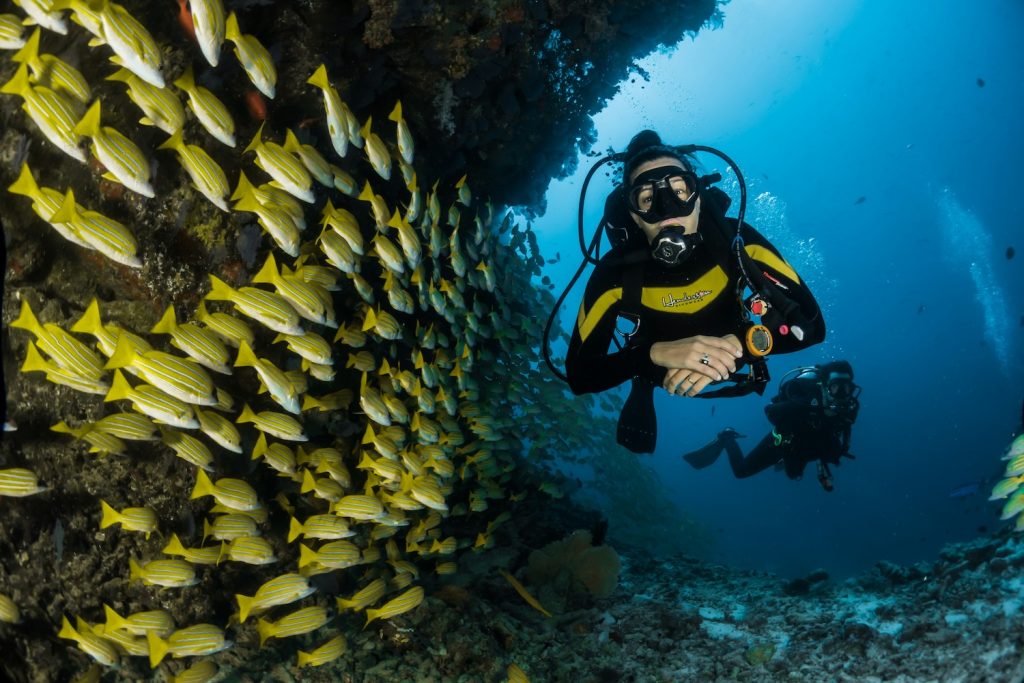
Top Reasons to Dive in The Bahamas
Still on the fence about diving in the Bahamas? Let us convince you.
First, the water clarity is absolutely insane. Visibility regularly exceeds 100 feet. On exceptional days, you can see 200 feet or more.
Second, the marine biodiversity is off the charts. Over 50 shark species call these waters home. Add in sea turtles, dolphins, rays, and hundreds of tropical fish species. Every dive brings you new encounters and surprises.
Third, the variety of dive experiences is unmatched. You can shark dive in the morning, explore a blue hole at midday, and finish with a wreck dive at sunset.
Finally, the Bahamas is accessible and well-developed for diving. You can find professional dive operators, quality equipment rentals, and experienced guides throughout the islands.
Types of Diving In The Bahamas
Shark Diving
Let’s start with the obvious crowd favorite. The Bahamas is world-famous for shark diving. It has healthy shark populations because of strong conservation efforts. These apex predators are thriving here.
Go shark diving to meet Caribbean reef sharks, blacktip sharks, tiger sharks, and even hammerheads, depending on the location and season.
Reef Diving
Reef diving is the bread and butter of Bahamian diving. Healthy hard and soft corals create complex ecosystems. Tropical fish swarm in dazzling numbers. You’ll see parrotfish, angelfish, butterfly fish, and countless other species. Turtles cruise by, and rays glide over as well.
Wall Diving
If you love the feeling of floating in blue space, wall diving will become your obsession. These walls plunge from shallow reefs down into the abyss. Sometimes they drop thousands of feet.
Blue Holes Diving
Blue holes are geological marvels unique to the Bahamas. These underwater sinkholes drop dramatically into the earth. The color gradients alone are worth the dive. Some blue holes even connect to cave systems. Others stand alone as vertical shafts.
Cave Diving
For certified cave divers, the Bahamas offers extensive underwater cave systems. These aren’t for everyone, though. Cave diving requires specialized training and equipment. But if you’re qualified, you’ll explore stunning limestone formations, stalactites, and hidden chambers.
Shipwreck Diving
The Bahamas has wrecks from various eras scattered across the seafloor. That includes Civil War blockade runners, modern freighters, and sunken vessels. History truly comes alive when you’re swimming through these wrecks.
Best Time of Year to Scuba Dive in the Bahamas
The good news is that you can dive in the Bahamas year-round. The water never gets uncomfortably cold.
That said, some seasons are better than others. December through April is considered peak diving season. The weather is stable and pleasant. Water temperatures also hover between 75-80°F. Additionally, visibility tends to be at its best during these months.
Summer months (June through August) bring warmer water temperatures around 82-86°F. But you might encounter afternoon thunderstorms and the occasional tropical weather system.
Note: Hurricane season officially runs from June through November, with September and October being the most active months.
For specific experiences, timing matters. Want to see hammerhead sharks, for instance? Visit between December and March. Tiger shark sightings peak around October through January in certain locations.
Scuba Diving for Beginners vs. Advanced Divers
The Bahamas welcomes divers of all skill levels. Seriously—there’s something here for everyone.
Beginners will find plenty of shallow reef dives perfect for building confidence and skills. Sites, such as the Barracuda Shoals, offer gentle conditions with incredible marine life.
Many operators even offer discover scuba programs and certification courses. You can literally learn to dive here and immediately explore world-class sites.
On the other hand, advanced divers can push their limits with deeper wrecks, challenging drift dives, and technical cave diving. For instance, The Washing Machine requires solid skills and comfort in currents. Alternatively, shark dives require calm nerves and situational awareness.
All in all, the beauty is that dive buddies with different skill levels can often dive the same general areas. Many sites have both shallow and deep sections. A beginner can explore the reef top at 40 feet while their advanced buddy checks out the wall at 90 feet.
Tips for Scuba Diving in the Bahamas
- Choose a reputable dive operator. Check reviews, certifications, and safety records before booking.
- Respect the marine life. Look, but don’t touch. Keep a safe distance from all creatures, especially sharks.
- Monitor your air consumption. The excitement can make you breathe faster than usual.
- Stay hydrated between dives. The sun and salt air are dehydrating. So, drink plenty of water.
- Use reef-safe sunscreen. Make sure to protect your skin without harming the coral ecosystems.
- Bring an underwater camera. Trust us; you’ll regret not capturing these moments.
Listen to your dive guide. Local knowledge is invaluable for safety and spotting wildlife.